


The circular economy in electronics addresses one of the most pressing environmental challenges of the 21st century: the rise of electronic waste (e-waste). Unlike the conventional linear model of “take-make-dispose,” the circular approach prioritizes strategies such as recycling, refurbishing, and reusing products at the highest possible level. This model emphasizes extending product life cycles, conserving resources, and minimizing environmental impact. With global e-waste projected to increase dramatically in the coming decade, shifting away from the throwaway culture of electronics is both urgent and achievable.
Key Concepts
Several concepts form the backbone of circular economy practices in electronics. The EU Green Deal, which targets climate neutrality by 2050, specifically addresses e-waste, currently the world’s fastest-growing waste stream. Policies encourage reuse, recycling, and sustainable product design, thereby embedding circularity into industrial frameworks.
Urban mining is another cornerstone, focusing on recovering valuable metals such as gold, copper, and aluminum from discarded electronics. This decreases dependency on virgin resource extraction, reduces environmental degradation, and supplies critical materials for new devices. Equally important is the Product Carbon Footprint (PCF), which tracks emissions across a product’s life cycle. While PCF integration into electronics is still developing, it offers a way to link emissions reduction with circular practices.
The WEEE Directive further enforces producer responsibility by mandating collection and recycling programs. These policies align with the concept of R-strategies—a hierarchy that includes Refuse, Reduce, Reuse, Repair, Refurbish, Remanufacture, and Recycle—providing structured guidance for maximizing resource efficiency.
The Mandate from the E-Waste Crisis
E-waste represents a global crisis accelerating at alarming rates. In 2022, approximately 62 million tonnes of e-waste were generated worldwide, and by 2030, this figure may reach 82 million tonnes. Yet only around 22% is effectively recycled. The environmental consequences are severe, given the presence of hazardous elements like mercury, lead, and brominated plastics. Beyond pollution, resource loss is another major issue. Electronics contain valuable critical materials that, when discarded, drive further mining and carbon-intensive production, reinforcing the need for circular alternatives.
Current Implementation of R-Strategies
Evidence of circularity exists across the electronics sector but varies in effectiveness. Recycling is the most widespread, especially targeting high-value metals, though it typically destroys intact components that still hold utility. Refurbishment, a growing practice, extends the life cycle of laptops, smartphones, and household appliances, benefiting affordability and sustainability. Reuse at the product level provides the greatest preservation of value. For instance, electric vehicle (EV) batteries are increasingly finding second-life applications in stationary energy storage, reducing waste and stabilizing renewable energy supply chains.
Requirements for High-Level Reuse
For reuse and second-life applications to scale, several challenges must be resolved. Extracting components—particularly semiconductors—can be costly, requiring modular designs that support easier disassembly. Component aging also demands rigorous testing to ensure performance and safety. Advanced degradation tracking tools that monitor stressors like temperature, load, and voltage are essential to predict failures. Software licensing needs to evolve to allow updates or transferable rights for refurbished devices. In parallel, user expectations for performance, reliability, and warranty equivalency must be met through stringent testing and quality processes.
Business Case for Circular Electronics
Circularity in electronics is not merely a sustainability ambition; it carries compelling economic incentives. Manufacturers can achieve significant cost savings by reusing first-life components instead of sourcing new materials. The refurbished market continues to expand, tapping into consumer demand for affordable, reliable devices. Moreover, firms adopting circular practices gain new competencies in logistics, repair services, and component recovery, creating avenues for innovation and revenue diversification while reinforcing brand responsibility.
Conclusion and Future Outlook
The shift toward a circular economy in electronics is both a necessity and an opportunity. With e-waste volumes climbing and linear production increasingly untenable, circular practices represent a pragmatic path forward. By embedding R-strategies, improving product design, and aligning with evolving regulatory frameworks, the sector can transition from waste-intensive operations to sustainable growth. Far from being an unavoidable burden, e-waste can become a rich resource base, powering future generations of electronics responsibly and profitably.
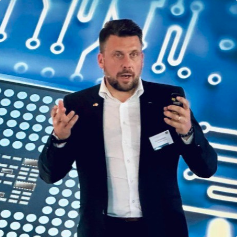
Circular Economy in Electronics: A Comprehensive Overview
Written by; Ole Gurkensmeyer
Vice President | EMEA Sales | Board Member | Semiconductors | Strategy | Sustainability | Power Electronics | E-mobility | Infrastructure

Winning big in Semiconductors: The Blueprint for Predictable Growth
Written by; Shari Begun
Let’s be honest: in semiconductors, great tech gets you in the door—but it doesn’t win the deal. The companies that consistently win big? They’re not just reacting to what customers say—they’re uncovering what hasn’t been said yet. Then they move fast, execute with precision, and stay focused on what matters.
The real differentiator? It’s not luck. It’s a blueprint—a repeatable way of thinking, prioritizing, and working that turns opportunity into predictable revenue and profitable growth, even in the most volatile markets.
Focus on What You Don’t Know
The biggest growth often hides in the blind spots. What’s around the corner for your customer? Who’s really influencing the next design? Where are the dollars actually going next year?
Too many teams spend the majority of their time servicing existing business. Yes, we need to deliver flawlessly—but that shouldn’t consume most of your day. If your team is only protecting what’s already won, you’re playing defense. Growth comes from chasing new programs, new people, and new problems to solve.
Curiosity wins. Go find what you don’t know.
Be Strategic, Then Get Scrappy
You can’t win everywhere. So prioritize. Where’s the revenue? Which customers matter most? What programs actually have legs?
Build your funnel based on reality—real volumes, real timelines, real competitive dynamics. Use the tools: block diagrams, site maps, stakeholder charts. And when things slow down? Escalate early. Follow up relentlessly. Never confuse interest with commitment.
Big Customers, Big Complexity
Large customers are never simple. There’s no single decision-maker, and priorities shift constantly. Legal terms, ESG, supply assurance—those aren’t afterthoughts. They’re critical.
So get ahead of them. Know who needs to be in the room. Build relationships across supply chain, design teams, and leadership. Don’t wait to be told what matters—go ask.
Land Smart, Expand Fast
Sometimes, the only way in is through a small win. That’s okay—as long as you treat it like the first step, not the finish line. Show up in engineering reviews. Share insights before they ask. And always define next steps: If we do this, will you do that?
Small wins become strategic when you deliver value fast and follow through.
Sales Is Everyone’s Job
This isn’t just on the account manager. Your BU, ops, and customer service teams are part of the sales engine too. Help them think like sellers. Ask smart questions. Listen first. Connect the dots back to the customer’s goals.
Strong internal alignment builds even stronger external trust.
Lead with Clarity. Push with Urgency.
The best leaders don’t micromanage—they unblock. They align teams, confront friction, and push on the right priorities. They ask, “Where’s the next $10M?”—and they don’t wait for perfect conditions.
In semiconductors, growth isn’t an accident. It’s intentional. It’s built. And with the right blueprint, it’s repeatable.
Let’s go win.
Blindspots in planning – the unsustainable factor
In today’s world of advancing technology, tariffs, investment in facilities and deep shortages it’s easy to think that solutions are themselves technological. Much of the promised funding and construction – particularly in USA – is geared to safeguard supply chains, and to develop national resilience to external factors and risk.
While important – the ability to produce chips, to build stuff and physically have enough production capacity is key to the economy, not only votes in an election year – the press and coverage tends to gloss over one critical piece of the puzzle…..where are the qualified personnel going to come from to sustain this growth? To deliver the materials promised by politicians?
Looking to the USA for example, various think-tanks estimate a shortfall of 50-75,000 qualified people (heavily biased to engineering) by 2030. This may seem far off, but the problems are being felt now. Almost every one of the critical fabs and foundries committed to under CHIPS act funding are delayed. Why? Lack of personnel. If factories cannot be built, or advanced semiconductor capital equipment operated and calibrated then progress is necessarily delayed. I’d be keen to see an AI that can build a factory!
So how can you, as a consumer of talent, safeguard yourself against problems in finding enough people to run your operation? You could poach from competition, but that’s expensive and ultimately a zero sum game. You could re-hire your retired engineers as consultants, and pay them $1,000 a day. Or you can invest in training programmes, and develop your people from an early stage to bring in the customised, focused talent you desire. Perhaps you partner with technical colleges and offer apprenticeships.
People are a competitive advantage, but by their nature are not sustainable or resilient. Planning to sustain their capacity by augmenting their skills with data tools and systems is wise, but by developing process and strategy, hand-in-hand with a focused agency like IC Resources should be a go-to for your sustainability needs.

Written by; Claus Aasholm

IC Resources highlights
Global growth, industry recognition, and a bright outlook for 2025
James Cunningham – Business Development Director
Our CEO and Co-Founder, Neil Dickins, has had a standout year. In recognition of his long-standing commitment to the UK deep-tech industry, Neil has received two prestigious awards. In December, the TechWorks ‘Contribution to Industry’ Award, and just last week he was awarded the Silicon Catalyst ‘Octagon of Excellence’ award in Mountain View, Silicon Valley. Neil also plays an active role with the UK Electronics Skills Foundation (UKESF), helping to bridge the skills gap and inspire future talent in electronics. His deep knowledge of the semiconductor and electronics sectors and his ability to identify emerging companies and trends continue to be a driving force behind our business.
Since January 2025, we’ve been actively expanding our global footprint and deepening our engagement within the tech community:
New Office in Austin, Texas
In March 2025, we proudly opened our fifth office in Austin, Texas, located in the Four Points area of West Austin. This strategic move strengthens our presence across North America and CALA (Central and Latin America), with a focus on semiconductor and software recruitment. The office will serve as a regional hub, tapping into Austin’s thriving tech scene. We’re delighted to have Tom Chapman as President and Zach Ward as Vice President of Sales leading the charge.
National Sponsorships
As part of our ongoing commitment to supporting innovation in deep tech, we’re proud national sponsors of key organisations who are driving progress across the semiconductor sector, including The Bessemer Society, ChipStart UK, and TechWorks. Through these partnerships, we help foster collaboration between visionary start-ups, industry leaders, and technical talent. Whether it’s championing early-stage ventures, contributing to thought leadership, or supporting UK tech on the global stage, we’re invested in the long-term growth of the semiconductor and wider deep tech ecosystem.
Here’s to continued innovation, collaboration and global growth in 2025 and beyond!
For more information on any of the articles featured in this edition of The IC Resource, or, if you would like to contribute to our future editions, please get in touch – james.cunningham@ic-resources.com or, +44 (0)118 988 1166.
As well as writing long-term success stories, our aim is to contribute to the health of the industry as a whole.
IC Resources has been supporting the technology community since 1999. We are an independent, founder-led recruitment consultancy with a team of 70 specialist consultants, operating across the Semiconductor, Electronics, Software, AI, Photonics and Quantum sectors. Our work spans technical operations, sales and marketing and executive search, and we’re proud to offer both global reach and local expertise with offices in Reading, London, Munich, Austin and Pennsylvania.
Subtitle for This Block
Title for This Block
Text for This Block
1530 Arlington Business
Park, Berkshire.
RG7 4SA
© Intellectual Capital Resources Ltd 2024
